×
×
How to shift from a volume-based PPC strategy to an AI-driven precision model that captures high-intent patients.
 Google
 Meta
Meta Instagram
 TikTok
 YouTube
 ChatGPT
The budget drain
Broad keywords and manual bidding overspend on price-shoppers and emergency-only leads that never convert.
Cost-per-click on terms like "dental implants" has hit an all-time high, so broad keywords waste budget on price-shoppers.
A lead who clicks at 9 PM and waits until 8 AM for a callback is already booked with a competitor.
Budget quietly leaks to career searches like "dental assistant jobs" instead of actual prospective patients.
Manual bidding on broad services can't compete with AI models that find high-intent patients before they even search for a dentist.
The playbook
Each one trims waste and puts your budget in front of higher-intent patients.
Feed Google's AI your top-production patient data so it builds a lookalike audience across Search, YouTube, Maps, and Display.
Build ad groups around symptoms like "why is my tooth throbbing at night" — these searchers are often more ready to book than a generic "dentist near me."
Filter out terms like "cheap," "free," and "Medicaid," plus career searches like "hygienist salary," so your budget only reaches real prospects.
Send every ad to a page with instant booking or a 24/7 chatbot — lowering the friction to book effectively lowers your cost per acquisition.
Questions
Related industries
Reviews

“Amazing team and a great product — they took my business from brand new to multiple locations over the last 5 years. I'd recommend the team at Marketing 360 to anyone.”
“From the beginning it's felt like the team is on our side, not out for their own gain — genuinely refreshing. They made the website easy to understand every step of the way. Very glad I took this leap of faith.”
“Alex did an amazing job on the website and walked me through, step by step, how to update things myself. I love that the quote button alerts my email the moment a potential customer requests one.”
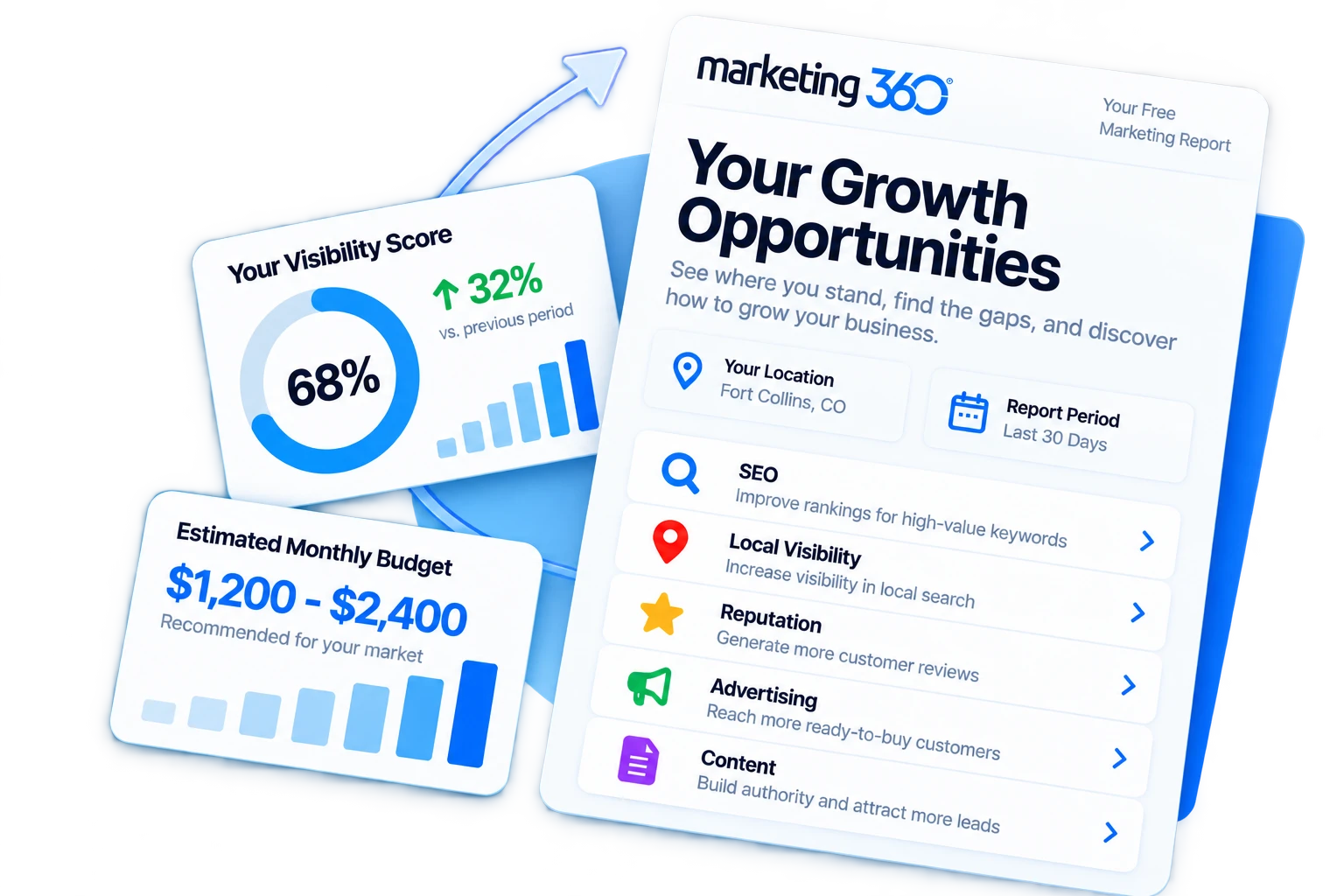
See Your Growth Opportunities
Get a free marketing visibility report to see where your business stands, where you're missing opportunities, and what it could cost to maximize your visibility in your market.