×
×
Automating the repetitive, after-hours tasks at your front desk — not replacing the human touch — is what keeps your chair full without burning out your team.
The bottleneck
Recalls, insurance questions, and emergency calls compete for the same overloaded team.
A patient with a broken crown at midnight doesn't want to leave a voicemail and wait until morning.
One-size-fits-all appointment reminders get ignored by patients who'd actually respond if you reached them the way they prefer.
Post-procedure confusion about bleeding, diet, or pain after a procedure drives a huge share of your daily call volume.
Thousands of dollars in unscheduled treatment plans sit untouched because following up on every one by phone doesn't scale.
The playbook
A voice or chat assistant asks follow-up questions to determine if it's a real emergency and routes accordingly.
Smart scheduling learns whether a patient responds to texts or email and adjusts delivery to match, then auto-fills cancellations from a waiting list.
Triggered sequences walk a patient through a short video, a day-one check-in survey, and an escalation path if discomfort is high.
Personalized education and a direct booking link follow up on unscheduled treatment plans without a single manual call.
Questions
Related industries
Reviews

“Amazing team and a great product — they took my business from brand new to multiple locations over the last 5 years. I'd recommend the team at Marketing 360 to anyone.”
“From the beginning it's felt like the team is on our side, not out for their own gain — genuinely refreshing. They made the website easy to understand every step of the way. Very glad I took this leap of faith.”
“Alex did an amazing job on the website and walked me through, step by step, how to update things myself. I love that the quote button alerts my email the moment a potential customer requests one.”
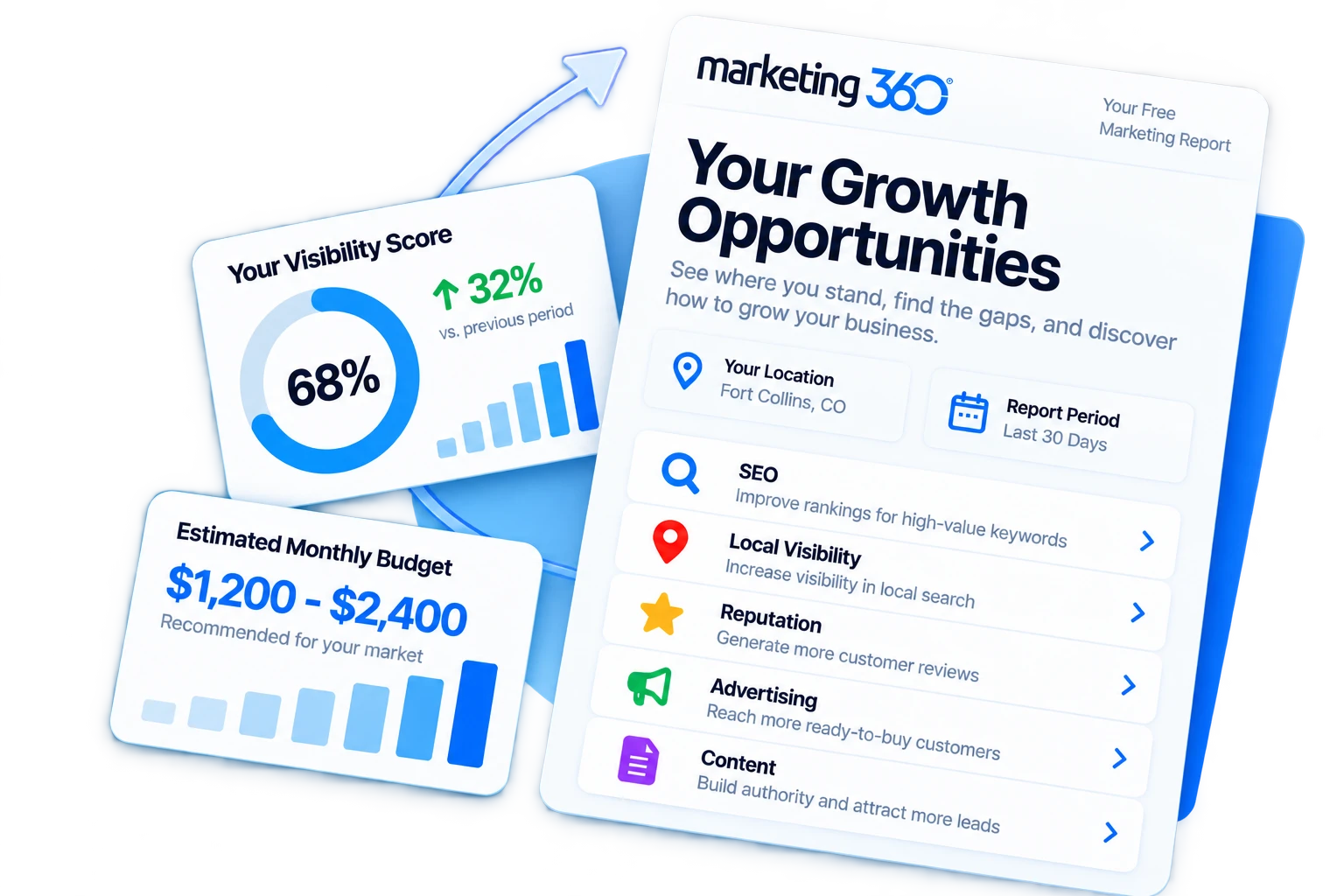
See Your Growth Opportunities
Get a free marketing visibility report to see where your business stands, where you're missing opportunities, and what it could cost to maximize your visibility in your market.