×

Being present isn't enough — being effective is. Here's the five-step framework that turns small business marketing into measurable ROI.
The problem
You need to be effective and efficient in reaching your target audience and driving conversions.
Without SMART goals, it's impossible to tell if your marketing is actually working or just busy.
Guessing at your audience's demographics and pain points means your message misses the people who'd actually buy.
Spreading budget across every channel instead of where your audience actually spends time wastes spend.
Driving traffic without optimizing the site for conversion just means more visitors who leave without converting.
The framework
Practical tips and insights for small businesses looking to maximize their ROI.
Set specific, measurable, achievable, relevant, and time-bound goals so you can track progress instead of guessing at results.
Research demographics, psychographics, and pain points to shape messaging, channel selection, and overall strategy.
Focus budget on social, SEO, email, content, and paid channels where your specific audience actually spends time.
Monitor website traffic, conversion rates, and acquisition costs to see what's working and where to adjust.
Make your site mobile-responsive and SEO-ready, with calls to action that guide visitors toward the action you want.
Questions
Related solution
Reviews

“Amazing team and a great product — they took my business from brand new to multiple locations over the last 5 years. I'd recommend the team at Marketing 360 to anyone.”
“From the beginning it's felt like the team is on our side, not out for their own gain — genuinely refreshing. They made the website easy to understand every step of the way. Very glad I took this leap of faith.”
“Alex did an amazing job on the website and walked me through, step by step, how to update things myself. I love that the quote button alerts my email the moment a potential customer requests one.”
See Your Growth Opportunities
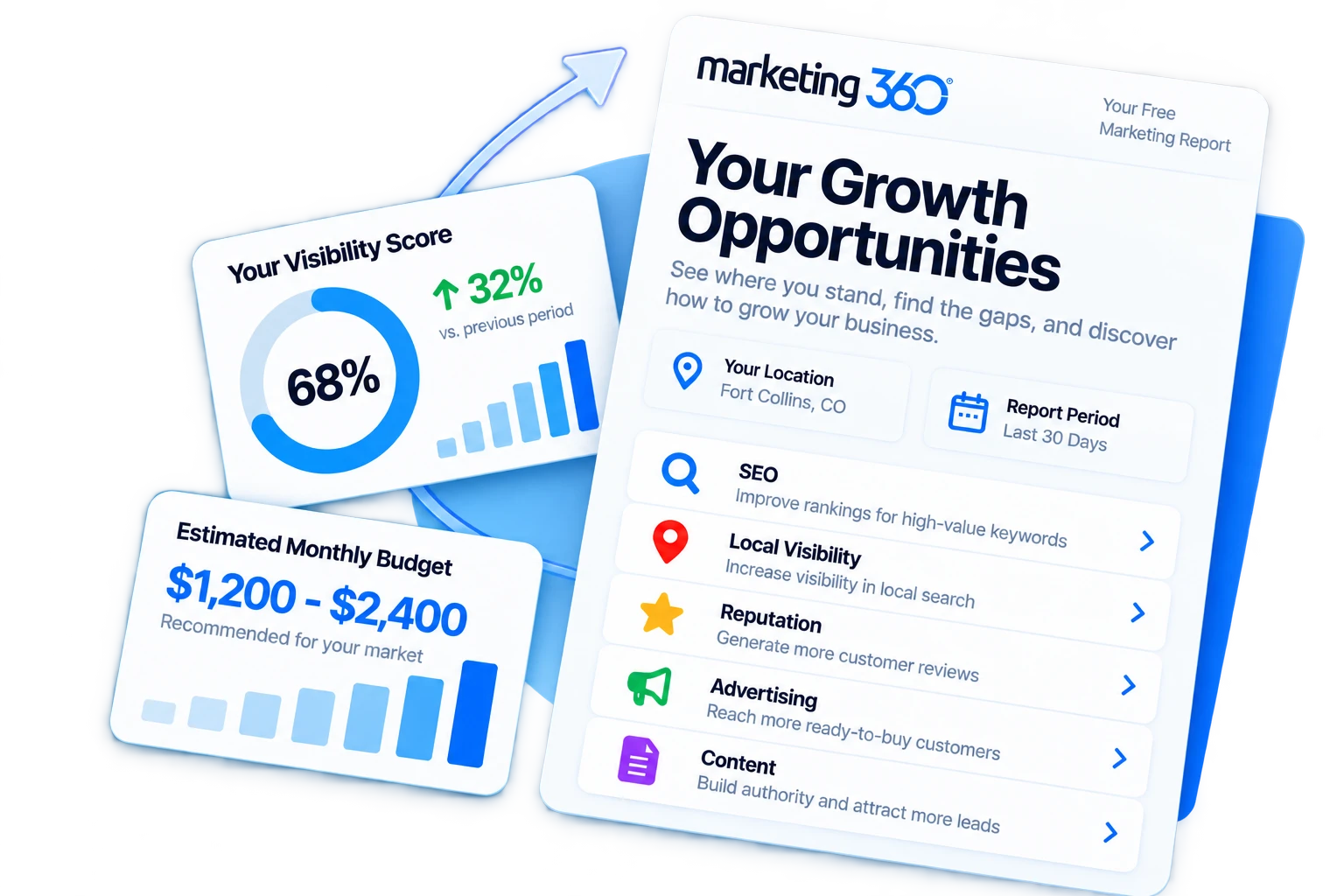
Get a free marketing visibility report to see where your business stands, where you're missing opportunities, and what it could cost to maximize your visibility in your market.