
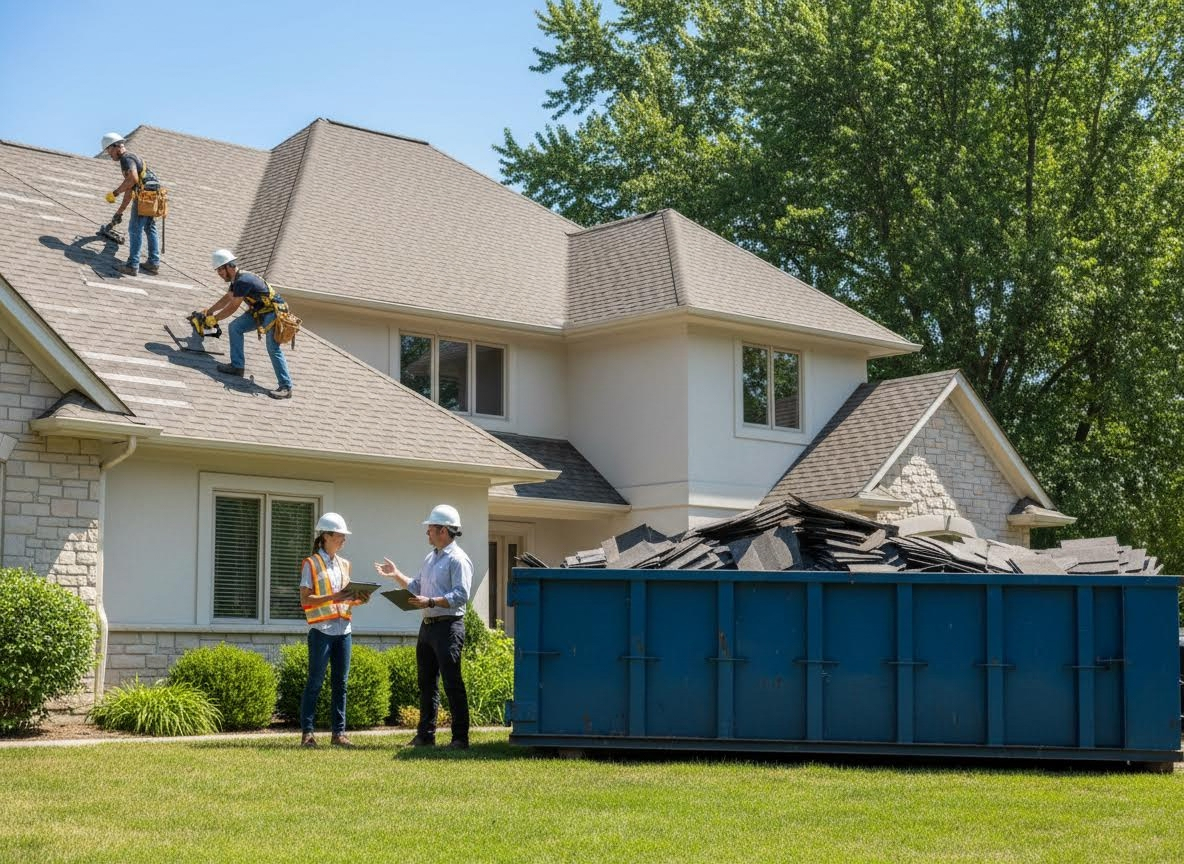
Mastering AEO (AI Engine Optimization) for the Modern Roofing Contractor
The search landscape has shifted. In 2026, homeowners aren't just scrolling through a list of blue links; they are asking questions like, "Who is the best metal roofer near me with financing?" and getting a single, comprehensive answer generated by AI.
Whether it’s Google’s AI Overviews, ChatGPT or Perplexity, these answer engines are the new gatekeepers of your leads and an integral part of roofer marketing. If your roofing company isn’t being cited as a source in these answers, you’re effectively invisible. Here is how you ensure your roofing business is the one the AI recommends.
Content Marketing For Roofers Call Sales
1. Shift from keywords to topical authority
AI models don't just look for keywords, they look for the most authoritative source on a specific subject. To win, you must own the neighborhood knowledge.
The strategy: Instead of one generic page about roofing services, create a cluster of content around specific local problems. Write about "Common hail damage patterns in [Your City]" or "How [Your State] humidity affects cedar shake shingles."
Why it works: AI rewards depth. When you provide the most detailed data on a specific niche, the AI views your site as the source of truth.
2. Optimize for natural language queries
People talk to AI differently than they type into a search bar. They ask full questions. Your website needs to provide the exact answers to those questions.
The formula for AI success: Implement an FAQ section on every service page. Use the exact phrasing homeowners use: “How long does a roof replacement take in rainy weather?” Then, provide a direct, 2–3 sentence answer immediately following the question. AI loves snackable data it can easily scrape and quote.
3. Clean your digital footprint
AI models cross-reference data from all over the web to verify if a business is trustworthy. If your information is inconsistent, the AI will skip you to avoid giving the user a hallucination or a bad recommendation.
The N.A.P. rule: Ensure your name, address, and phone number are identical across Google Business Profile, Yelp, Facebook, the BBB and all other business listings.
Review velocity: It’s not just about a high rating, it’s about recent reviews. AI prioritizes companies that are currently active and satisfying customers.
4. Use structured data (Schema Markup)
Think of Schema Markup as a cheat sheet for AI. It’s code you add to your website that tells the AI exactly what your business does, what areas you serve and what your prices are without it having to guess.
Ensure your developer has implemented LocalBusiness and Service schema. This allows the AI to instantly identify your area served and price range, making you a safer choice for its recommendation.
5. Focus on zero-click content
In the past, we wanted people to click our site. Now, we want the AI to show our answer on the search page. This sounds counterintuitive, but being the cited source in an AI overview builds massive brand trust.
Post proof of work videos with transcripts.
Upload high-quality, labeled before and after photos to your Google Business Profile.
Write blog posts that compare materials (e.g., "Asphalt vs. Metal: What's better for [City] winds?").
The 2026 Checklist:
[ ] Is my Google Business Profile updated weekly with new photos?
[ ] Do I have at least 10 FAQs on my homepage?
[ ] Is my site's technical Schema up to date?
[ ] Am I getting at least 3 new reviews every week?
The bottom line
AI doesn't guess who the best roofer is; it calculates who the most reliable source of information is. By providing clear, structured and hyper-local content, you make it easy for the AI to choose you. Stop trying to rank and start trying to answer.